
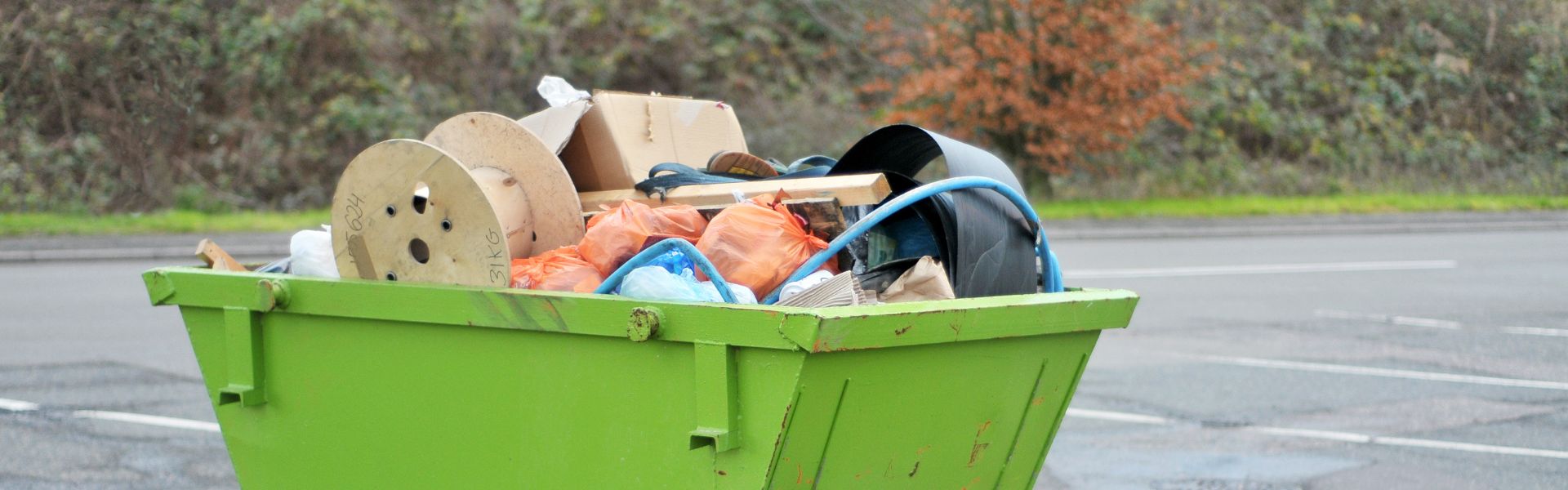
Skip hire in Thorney
Thorney is a fen village that a Duke built to a plan, with estate cottages, a water tower and an abbey church. A skip here has to sit comfortably in that setting, and in gardens that were measured out long ago.
Postcode on the next step
Get Instant PriceWhich skip do I need?Official Just Hire Partner. Bookings powered by Just Hire.
Thorney at a glance
- CouncilUnitary city council area
- Road permitsPeterborough City Council
- Recycling centreFengate, PE1 5XG
- Local heritageBedford estate village
An abbey, a Duke and a village drained from the fen
Thorney's story begins with its abbey, which made a Saxon settlement into an important church centre; the former abbey church is now the parish church of St Mary and St Botolph. After the Dissolution the land passed to the Russell family, the Earls and later Dukes of Bedford. In the 1630s the 4th Earl is said to have spent a fortune draining the fen, bringing almost the whole parish of nearly 18,000 acres under the plough. Protestant refugees from Flanders, Walloons and Huguenots with drainage skills, had settled in the village and used the abbey ruins for services in their own language.
Much of what you see today was built at the order of the Dukes of Bedford in the mid-nineteenth century, to designs by the architect S. S. Teulon. Bedford Hall, once the Tankyard, has a 96-foot water tower of 1855 that supplied fresh water to the village, and it now houses the Thorney Heritage Museum. The estate was sold to its tenants in 1910, so many of those cottages are now privately owned and lived in by families with the usual need for refits and clear-outs.
Bookings go through Just Hire. Pick the size, the waste type and the spot for the skip, and the VAT-inclusive price is displayed.
Thorney cottage and yard jobs, sized up
- 2-yard mini skipan old outhouse behind an estate cottage
- 6-yard builders skipa worn-out path and yard resurfaced
- 8-yard builders skipa cottage kitchen and bathroom refit
- 12-yard maxi skipclearing a family home or smallholding
Skip positions around the abbey and estate cottages
Estate cottages are close to the road, and many have small yards at the back, so placement needs thought before a size is chosen.
On a driveway
A drive, farmyard or hard standing within your own boundary needs no permit. Check the gateway width, and use boards on gravel or soft ground, which the lorry's wheels can cut up easily.
On the road
Thorney's public roads are the city council's responsibility. Just Hire seeks the skip licence for you if you want the road, and the booking leaves about five days for it. The council prefers roadside skips to be avoided where possible.
Wait and load
Where cottages front the street and there is nowhere safe to put a skip, the lorry can wait while you fill it and take it away at once, so no permit or road space is needed.
A fen village inside the city council boundary
Thorney lies several miles out in the fen, yet it sits inside the unitary area, so the council that runs Fengate and the city streets also licenses skips here. You do not deal with it yourself: choose a road position and the licence request is handled by Just Hire.
Its yardsticks are plain: parking restrictions, the road width left for others, a safe walking route if a footway is used, and the surface. Skips are best kept off the highway. If a Bedford cottage on Wisbech Road has no yard, plan the road skip about five days out, which is the time the booking page gives Just Hire for the licence.
The guide to permits and positioning describes the lighting and marking a roadside skip must carry.
Living in a conservation area built by one landlord
The council lists Thorney as a conservation area, designated in the 1970s. Its character comes from the Bedford estate: uniform cottages, a water tower, a heritage museum and the abbey church at its centre. A mid-nineteenth-century village built to one plan has a rhythm that a skip standing outside a cottage can disturb, so the neighbours may notice.
In practice that means choosing the spot with care. Keep the skip off verges and grass, clear of the abbey and the museum, and away from boundary walls and old trees. Tree work in a conservation area needs notice to the council first, which affects hedge and orchard clearances.
Altering the outside of an estate cottage may need planning or listed building consent, and that is separate from a skip booking. If a job might change a building's appearance, ask the council before the work starts, not after the skip has been delivered.
Estate cottages, outhouses and tight yards
A typical Thorney cottage has a small yard, a brick outhouse and a long thin garden. Strip-outs inside produce lath, plaster and old floor boards, while the yard supplies brick, slate, broken pavers and rotten timber. Choose mixed waste for a refit and hardcore for the brick and paving.
Because the yards are small, the size of skip matters. A 4-yard skip, and at a push the 6-yard, which is shorter, fits more easily than a 12-yard one, and two smaller skips in sequence are often easier than one big one that blocks the lane. Measure from the gate and think about the lorry's turn.
Wet fen soil is heavy. If you dig out a bed or lay a new path, fill soil skips level and no higher, or split the work in two loads, since soil weighs far more than builders' rubble.
Plasterboard and kitchen units from a refit should be kept as free from other waste as practical. For renovation planning, the guide to renovating a home or office is a good starting point.
Fengate, the long way round for a small load
Thorney is served by the city's one tip, Fengate Household Recycling Centre, Dodson House, PE1 5XG. A free e-permit is needed for every vehicle, so check the council's e-permit page before setting out with a load.
Vehicles bigger than a long-wheelbase transit are turned away, and so are trailer beds over 2.5 metres. Building materials get a token allowance of a couple of bags or items, and a household cannot visit more than four times in four weeks.
That makes it a long trip for little result, which is why many Thorney jobs end up in a skip. For a few bulky pieces, a Man & Van collection saves the journey, and the guide to dangerous waste shows where banned items go.
Old drains, pipes and yard resurfacing
The seventh Duke's village came with a modern water supply and sewerage scheme, built into the ground a century and a half ago. Yards and back gardens behind estate cottages can therefore hide old pipework, soakaways and drains, and anyone digging up a yard to relay it will meet them.
Digging out produces three kinds of waste that should be kept apart if you can: clean earth, which goes in as soil; brick, concrete and broken pipe, which is hardcore; and everything else, which is mixed. Old clay and cast iron pipe is heavy, so keep a skip for it well below the top.
Resurfacing a yard or drive is the other big job. Lifting old concrete or tarmac gives a lot of weight in a small volume, and a skip of it is much heavier than a skip of furniture. Choose a smaller size, and ask yourself whether the lorry can lift the load safely from where the skip will stand.
Anything near a ditch or dyke needs extra thought. Do not tip spoil into or beside one, and keep fuel, oil and cement washings out of the drain.
Farm-edge gardens, drains and the wash
Thorney's land was drained for farming, and that shapes it still: flat, open, windy and wet in winter. Gardens on the village edge back straight onto fields, and hedges, fencing and sheds take a battering from the weather. Garden waste is a regular skip type, for hedge cuttings, branches and grass.
Soft ground is the main risk. A heavy skip on wet grass or a gravel verge will sink, so stand it on a hard surface or on boards. Do not leave it where a field gateway needs access, and do not put anything over the dyke or ditch behind your garden, which is both a drain and a pollution risk.
People who keep animals or run a smallholding often want a skip for old fencing, feed sacks and rubble. Farm and business waste carries a legal duty of care, so keep the booking confirmation as the record of where it went.
Windmill, station gates and a village of long memory
Thorney has a windmill dating from 1787, with six floors, and the replica level crossing gates on Station Road echo the Peterborough to Wisbech railway, which closed to passengers in the early 1960s. The A47 bypass opened in the winter of 2005 and moved the heavy traffic away from the village streets.
That helps a delivery: with the main road out of the way, a lorry can reach the village without a crawl through a high street. Still, the older streets are narrow, and a lorry needs room to reach the spot and lift. Look for cables and branches over the drop, and tell the booking if the access is tight.
Sales, probate and moves are also behind many skips. Clear in stages: charity items first, then electricals, paint and gas bottles to the right place, and the rest into the skip. A 12-yard skip suits a whole house, and the 8-yard, the most popular size, suits a refit.
Tell your neighbours which day the lorry is due and ask them to leave the stretch of kerb outside your gate clear, which matters most on narrow estate streets where one parked car can block the whole approach.
Skip hire near Thorney
Eye lies west along the A47, Crowland to the north, Whittlesey across the fen to the south, and Coates and Stanground are a little further on.
Frequently asked questions
Do Thorney's conservation rules stop a skip outside my cottage?
No, but choose the spot with care, keep it clear of walls and trees, and tell the council before any tree work in the conservation area.
Who licenses a skip placed on a Thorney road?
The city council, as highway authority. For a road position the licence request goes in through Just Hire, with five days or so allowed.
Is there a recycling centre in the village?
The council's page names only Fengate, so plan around that and check its e-permit rules.
What size fits a small estate cottage yard?
A 4-yard skip, and at a push the 6-yard, is easier to place than a larger one, and a second one can follow if needed.
Is a field gateway a sensible place for a skip?
Only if you own it and no one needs access. Keep skips off verges and out of drainage ditches.